
This article is currently available in English.
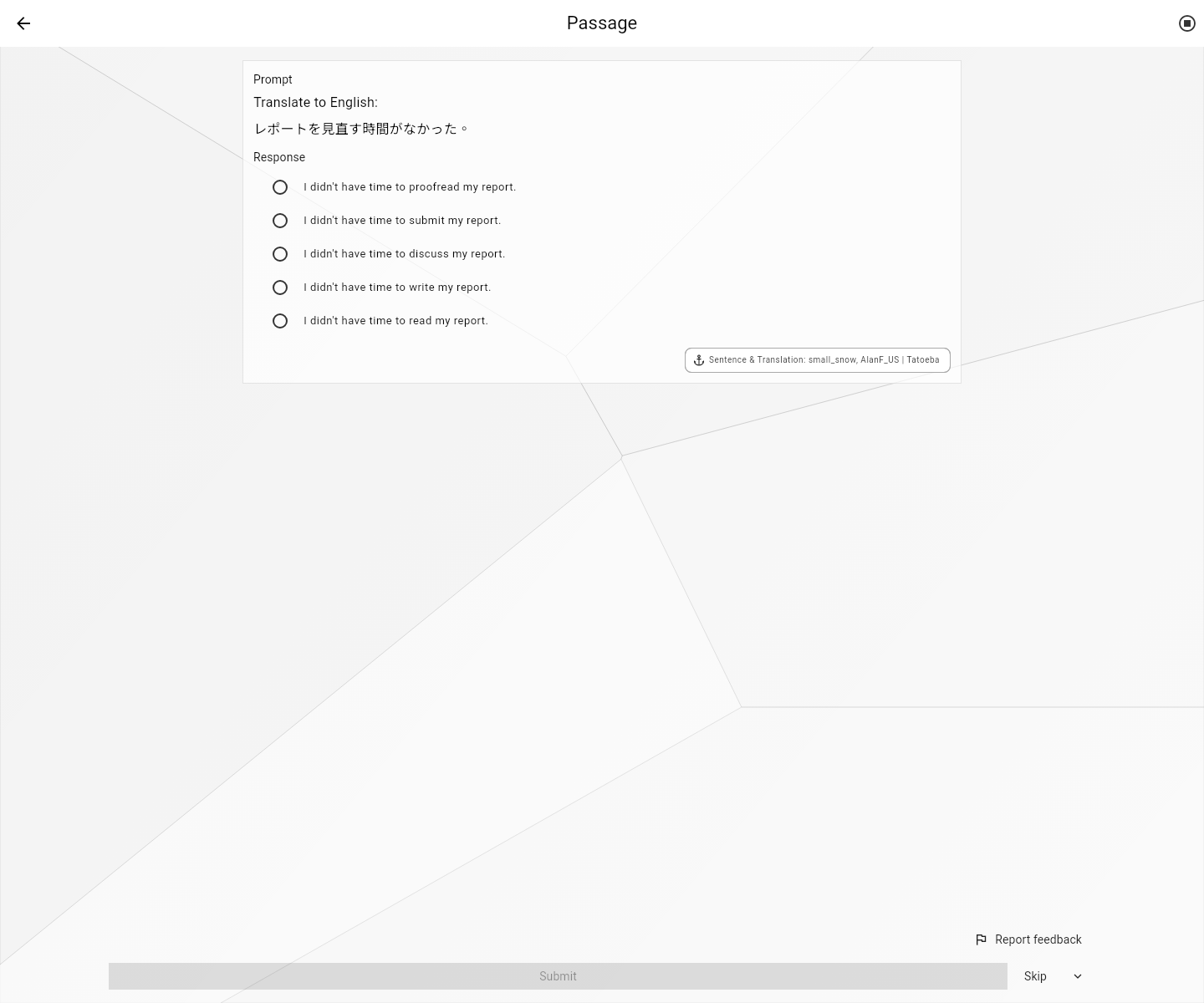
AI is useful for language learning because it can respond to context. It can vary a prompt, explain a distinction, or create another chance to practice the thing a learner just missed.
The same flexibility creates a design problem: where did the learning material come from, and which parts can a learner inspect?
Shaded’s answer is an object we call an Anchor.
Keep the source beside the material
An Anchor connects a learning item to supporting material when that support is available. It can carry details such as:
- the source;
- the specific source item;
- license and attribution information; and
- the sentence, translation, or concept the source supports.
That relationship matters more than a generic bibliography hidden several screens away. The useful context should remain attached to the material a learner is actually seeing.
Grounding is not a magic label
It would be misleading to imply that every generated sentence or explanation is fully verified because some source material exists nearby. Coverage varies by language pair, activity, and the evidence available.
Anchors are therefore intentionally specific. They show what is supported and how. They do not make broader claims about material they do not cover.
That boundary helps learners, but it also helps us build the product. A visible source relationship is easier to review, test, improve, and correct than an invisible one.
Flexible where it helps, inspectable where it counts
Fixed material is easier to audit, while generated practice is easier to adapt. We do not think language learners should have to choose entirely between those properties.
Shaded can use AI to shape practice around a learner while preserving source-backed examples, dictionary material, and reviewed content as inspectable objects. The balance will keep evolving as coverage improves.
Anchors are one part of that work: a small interface with a large responsibility—to keep useful evidence connected to the learning experience instead of letting it disappear behind the model.